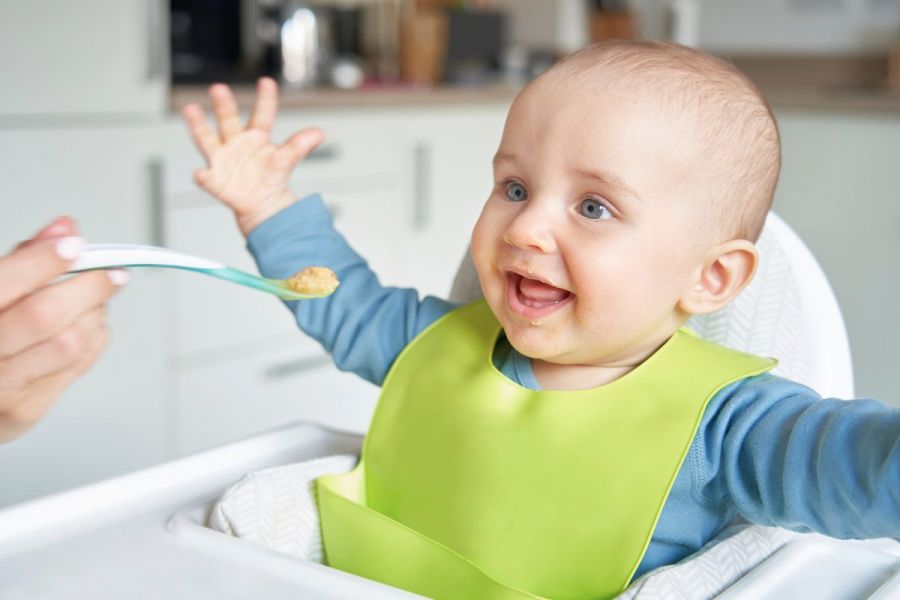
More than one nutritious food idea for 8 month old babies
A parent's guide to food for babies around 8 months old.
Finding the right food for 8 month old babies can be challenging. With a focus on taste and nutrition, this guide simplifies mealtime by providing solid food choices that support healthy growth without compromising on flavor — perfect for your eight month old baby’s introduction to the diverse world of food.
Introducing new foods is completely normal
- Breast milk or formula should still be the main part of an 8-month-old’s diet, supplemented by solid foods like iron-fortified cereals, pureed meats, and a diverse range of fruits and vegetables.
- Introduce a variety of foods and textures to support the development of fine motor skills and prevent food aversions; include iron-rich, protein-packed, and colorful fruits and veggies for balanced nutrition.
- Establish a feeding schedule that includes consistent opportunities for the baby to eat solid foods and drink 24 to 36 ounces of milk or formula daily, ensuring a smooth transition to more complex foods.
Understanding your 8-month-old's nutritional needs
You may have already noticed your 8-month-old showing more interest in the foods you consume. It’s the perfect time to expand their culinary horizons while ensuring that breast milk or formula remains their nutritional cornerstone. With a daily caloric intake between 750-900 calories, where 400-500 come from milk or formula, solid foods become a delightful supplement rather than a replacement.
Gradually, as you introduce solid foods, starting with single-ingredient items, is a recommended approach. This cautious approach not only helps monitor for any allergies or intolerances but also allows your little gourmand to adjust to new tastes and textures. Be mindful when introducing common allergens, such as eggs, nuts, and shellfish, ensuring your baby’s diet expands safely and deliciously.
Key nutrients
Iron is the star of the nutrient show for your 8-month-old, as their iron stores start to wane around this time. Since breast milk isn’t a sufficient iron source to keep up with their needs, introducing iron-fortified cereals and pureed meats can help keep their development on track. Ensuring your 8 month old baby still gets enough of this mineral, critical for cognitive and physical development, is of utmost importance.
The culinary world is your oyster when it comes to iron-rich baby foods. Unprocessed meats, iron-fortified cereals, and even well-cooked lentils can make for a diverse menu that keeps both you and your baby excited for mealtime. Remember, a varied diet not only provides the necessary iron but also exposes your baby to a symphony of flavors that will help shape healthy eating habits.
Feeding milestones
Your baby’s journey from purees to more textured foods is marked by the development of the pincer grasp. This fine motor skill, essential for self-feeding, begins to emerge around 8 months, progressing from a whole-hand grasp to the fingertips by 9 months. To encourage this, let your baby practice picking up small, safe foods and engage in activities that promote large movements, such as crawling.
Transitioning to textured foods isn’t just about adding variety; it’s a developmental step that aids in chewing skills and prevents aversions to new foods later on. Starting around nine months, introduce lumpy textures and bite-sized pieces to keep your baby’s eating skills evolving. Watch as they delight in their newfound abilities, one small bite at a time.
Tasty and nutritious food ideas for your 8-month-old
With the development of your little one’s palate, you should consider offering a variety of foods that are both delicious and nutritious. Safe preparation is key:
- Roast, bake, or stew meats and fish to ensure they’re fully cooked and ready for tiny tummies.
- Cut or mash foods into small pieces to avoid choking hazards.
- Remember, variety is the spice of life—and a well-rounded diet.
Incorporating family meal flavors is a fantastic way to introduce your baby to the world of eating. As they first start eating, to mimic your eating habits, blend their baby foods with age-appropriate versions of what you’re enjoying. This not only makes meal prep easier but also turns eating into a shared family experience. So go ahead, pass the pureed peas and let your baby join in the dinner table fun!

Iron-rich foods
Your 8-month-old’s diet should be primarily based on iron-rich foods. Start with the basics:
- Unprocessed red meats and poultry are fantastic sources of this critical nutrient.
- If you’re leaning towards a vegetarian diet, fear not! Well-cooked lentils and iron-fortified products can keep your baby’s iron levels topped up.
- And let’s not forget about iron-fortified infant cereals, which can easily be mixed into purees or served as a standalone meal to ensure your baby is getting this essential mineral.
When it comes to iron, consistency is key. Regularly including these iron powerhouses in your baby’s meals will support their rapid growth and development. And while iron might be the star, don’t forget to complement it with a cast of other nutrient-dense foods to make sure your baby’s diet is as balanced as it is delicious.
Fruits and vegetables
Fruits and vegetables open up a spectrum of possibilities for your 8-month-old’s diet. From the vibrant greens of pureed peas to the deep oranges of mashed sweet potatoes, these foods are not just visually appealing but packed with vital nutrients. Soft, cooked fruits like apple or pear puree provide a naturally sweet treat that encourages healthy eating habits.
Avocado is another excellent choice, being both a finger food and a source of healthy fats, which are important for brain development. Its creamy texture and mild flavor make it a hit with babies and a versatile addition to any meal. So get creative in the kitchen and watch your baby’s eyes light up with every new color and taste you introduce to them, like incorporating olive oil into their diet.
Protein-options
Proteins, the building blocks of growth, form an integral part of your 8-month-old’s meals. Whether it’s soft scrambled eggs, thoroughly cooked chicken pieces, or tender tofu, there’s a protein for every preference. And for the little cheese connoisseur, cottage cheese, shredded cheese, or soft pasteurized cheese cubes can be both a tasty treat and a protein punch.
Vegetarian families can turn to various soft foods and food groups, such as nut butters, soft cooked beans, mashed peas, firm tofu, and butternut squash for their protein needs as they transition from mashed foods to solid food. Spread nut butters thinly to prevent choking, and mash or puree beans for an easy-to-swallow option. Including mashed foods like butternut squash can also provide essential nutrients for a balanced diet.
Fish like salmon, cod, or flounder should be thoroughly cooked and free of bones, offering both protein and essential omega-3 fatty acids for your baby’s development.
Introducing finger foods and baby-led weaning
The introduction of finger foods not only marks a milestone but also offers an opportunity for your baby to lead their eating journey. Baby-led weaning emphasizes the importance of self-feeding, which can help your little one develop their motor skills and learn to self-regulate their hunger and fullness. As they navigate this new skill, they’ll delight in the independence and the exciting variety of tastes and textures at their fingertips.
When it comes to finger foods, safety is paramount. Here are some tips to keep in mind:
- Avoid choking hazards like whole grapes, nuts, and hard candies
- Focus on nutritious options that promote healthy eating
- Embrace the mess and encourage exploration
- Watch as your baby develops a love for food that’s both self-directed and joyful
Finger food ideas
Soft-cooked vegetables like carrots, sweet potatoes, and broccoli are perfect for tiny hands to grab and explore. These not only provide essential nutrients but also introduce your baby to a variety of textures and tastes. For a sweet treat, ripe bananas or soft-cooked pears can be cut into manageable pieces, making them ideal for practicing the pincer grasp. With the addition of sweet potato, this selection of foods offers a well-rounded introduction to solid foods for your little one.
And let’s not forget about breakfast time. Baby-friendly French toast, with no added sugar or salt, can be a delightful finger food option. Cut into strips or bite-sized pieces, it’s perfect for dipping into pureed fruits or a little yogurt, adding a fun twist to your baby’s first meal of the day.
Baby-led weaning tips
Baby-led weaning encourages your baby to take control, and there are numerous strategies to facilitate this approach. Here are some tips to help you:
- Encourage your little one to explore foods with their hands
- Allow them to attempt using a spoon, even if it results in a little extra cleaning up afterwards
- Remember that every baby is unique, and they’ll progress at their own pace, so there’s no need to rush or compare.
Consistency is key, so make sure any caregivers are also in the loop about baby-led weaning practices. The goal is to provide a supportive environment where your baby feels encouraged to try new foods and develop their feeding skills at a comfortable pace.
Sample mlan for 8-month-old babies
While creating a meal plan for your 8-month-old may seem challenging, with a bit of inspiration, you can prepare delightful and nutritious meals effortlessly. Here are some meal ideas for your little one:
- Breakfast: a mix of iron-fortified cereal and a scrambled egg, with some mashed fruit on the side
- Lunch: a colorful array of yogurt, pureed veggies, and proteins
- Dinner: a variety of textures with diced poultry, green veggies, and soft pasta
Snacks are equally important, offering an opportunity to top up on nutrients and keep your baby satisfied between meals. They can range from diced cheese and cooked veggies to whole grain crackers with a touch of yogurt or fruit. With these ideas in hand, you’re all set to create a meal plan that will keep your baby happy, healthy, and eager to eat.
Breakfast ideas
Breakfast is the perfect time to introduce a variety of textures and nutrients to start your baby’s day off right. Scrambled eggs mixed with avocado and a small slice of homemade bread can offer a delightful combination of creamy and soft textures for your baby to enjoy. A mashed banana is another great choice, providing a smooth texture and natural sweetness that’s sure to be a hit.
Experiment with different combinations to find what your baby loves best. The mix of proteins, healthy fats, and carbohydrates will give them the energy they need for a morning full of play and discovery. And who knows, you might even find a new breakfast favorite for yourself in the process!
Lunch and dinner ideas
Lunch and dinner are opportunities to introduce your baby to the flavors of the family meal, serving as a transition from baby food to more solid options, and exploring various baby recipes. Ground beef with guacamole and steamed broccoli can make for a nutrient-rich and tasty lunch, while dinner could be a comforting bowl of spaghetti with meat sauce or a savory lamb rice casserole. The key is to ensure the food is soft enough for your baby to handle and enjoy.
The variety keeps things interesting for your baby, so don’t be afraid to get creative with your meal ideas. Whether it’s mini moussaka with lamb and aubergine or tender crockpot pulled pork with peas, there’s no shortage of delicious and baby-friendly dishes to try.
Snack ideas
Snacks can be both a treat and a chance to sneak in some extra nutrients. Soft cheese cubes and cooked vegetables like peas are simple yet nutritious snack options for your 8-month-old. For something a little different, homemade muffins made with whole-wheat flour and mashed avocado, bananas or grated zucchini can be easily broken into small, manageable pieces for your baby to enjoy.
These snack ideas are not just about filling a gap between meals; they’re an essential part of your baby’s diet, providing them with energy and the essential vitamins and minerals they need to grow. So, keep those snack times wholesome, fun, and full of variety.
Establishing a feeding schedule for your 8-month-old
Although establishing a feeding schedule for your 8-month-old may appear overwhelming, the goal is to find a rhythm that suits your family. Ideally, your baby should be joining in on family meals, which not only provides a sense of belonging but also sets a positive example for healthy eating behaviors. Remember, though, there’s flexibility here—what’s important is providing consistent opportunities for your baby to eat and enjoy a variety of foods.
Start with small portions and adjust according to your baby’s appetite, which can vary from day to day. You’ll soon find a routine that fits seamlessly into your daily life, making mealtime a stress-free and enjoyable experience for the whole family.
How much milk and formula?
Managing milk and formula consumption is critical at this stage, as it still constitutes a considerable portion of your 8-month-old’s diet. Aim for 24 to 36 ounces over 24 hours, spread across four to six feedings to ensure they’re getting the nutrition they need for growth and development. You might find your baby consuming around 6 to 8 ounces at each feeding, which is just what their growing body craves.
Be attuned to your baby’s hunger and fullness cues to gauge how much breast milk or how much formula milk to offer. Early signs of hunger can be as subtle as sticking out the tongue or sucking motions, while fullness might be indicated by a baby letting go of the breast or bottle.
Cow’s milk should be off the menu until after their first birthday, keeping breast milk or formula as the main drink.
Meal frequency
As for solids, your 8-month-old might start with one solid meal a day, gradually increasing to at least two meals and then three as they get older, along with snacks to keep them content throughout the day. The typical feeding schedule could include two solid meals and three to four breast milk or formula feedings, amounting to 28 to 34 ounces of milk each day. This balance ensures they’re getting the full spectrum of nutrients needed for their rapid growth.
The transition to more solid meals is an exciting time, full of experimentation and discovery. With each new flavor and texture, your baby is learning and growing. So, while the focus on breast milk or formula remains, embrace this new phase of culinary exploration with your little one.
Tips for introducing new foods to your 8-month-old
The introduction of new foods adds an exciting element to your baby’s culinary journey. To ensure a smooth transition, keep an eye out for any allergic reactions when trying new foods, offering them over several days to a week. Don’t be discouraged if your baby makes faces or seems unsure—it can take many exposures before they warm up to a new food.
The key is to stay patient and positive. Your baby will pick up on your cues, so keep mealtime upbeat and stress-free. This is a learning experience for both of you, so embrace the mess and the occasional rejection as part of the process. With time and persistence, your baby will likely start to enjoy a wide range of new foods.
Trying new textures
Your baby is starting to explore the texture, a significant aspect of food. Offering a variety of food sizes, shapes, and textures can help develop the motor patterns necessary for eating more complex foods. Don’t be alarmed if your baby spits food out or gags occasionally; it’s a completely normal part of learning to handle new textures.
It might take multiple attempts before a baby learns to accept different finger foods. As they improve their chewing and swallowing skills, you can start to introduce lumpier food options, regardless of whether they have teeth. This gradual progression is essential for their eating development, so keep offering those new textures, and soon enough, your baby will be munching away happily.
Reading baby's cues
Understanding your baby’s cues is a vital part of feeding. Hunger cues might include enthusiasm in sucking or bringing their hands to their mouth, while fullness cues can involve stopping eating or turning away from food. It’s important to allow your baby the time they need to explore the taste and texture of foods without feeling rushed or pressured.
Be on the lookout for any adverse reactions, such as rashes or unusual fussiness, which could indicate an allergy to a new food. If you have concerns, don’t hesitate to consult with your pediatrician.
Above all, remember that every baby is different, and learning to read and respect your baby’s unique signals is key to a positive feeding experience.
Pureed foods and milk
The world of your 8-month-old’s nutrition is vast and delicious. From understanding their need for iron-rich foods and breast milk or formula to indulging in a colorful array of fruits, vegetables, and proteins, it’s clear that mealtime is both a nutritional necessity and an exciting adventure. With tips for introducing new foods and textures, along with sample meal plans, you’re now equipped to create a feeding schedule that’s as enjoyable as it is nourishing.
As your baby continues to grow and explore, remember that patience, consistency, and a dash of creativity will make this journey a success. Embrace each new milestone with excitement, and take joy in the knowledge that you’re providing the best possible start for your little one’s lifelong relationship with food. Bon appétit, baby!
What food can I give my 8 month old?
At 8 months, you can introduce a variety of foods including cereal, meats, vegetables, fruits, eggs, and fish, in addition to breast milk or formula, with a spoon. Avoid feeding these foods in a bottle or infant feeder.
What should an 8 month old eat on a schedule?
At 8 months, your baby should be eating solid foods at least twice or three times a day, along with 25 to 32 ounces of formula or breast milk every 24 hours. It's a good time to introduce a variety of foods and try using a sippy cup (or nibbler) and finger foods in their diet.
What finger foods can I give my 8 month old?
You can give your 8-month-old some steamed broccoli, roasted sweet potatoes, baked salmon, bananas, omelette strips, mango, roasted red bell peppers,, and steamed peas as finger foods. You can also try soft cheese, small pieces of pasta or bread, finely chopped soft vegetables, and fruits like bananas, avocados, and ripe peaches or nectarines. Remember that these foods should require minimal chewing, as your baby may not yet have teeth. (No date)
How do I know if my 8-month-old is getting enough iron?
Keep an eye on your baby or child's diet for iron-rich foods like meat, iron-fortified cereals, and lentils. If you're worried, talk to your pediatrician.
How much breast milk or formula should my 8-month-old be drinking?
Your 8-month-old should be drinking 24 to 36 ounces of formula or breast milk over 24 hours, divided into four to six nursing sessions. Aim to offer this amount each day to support their growth and development.